
 Image 1 of 1
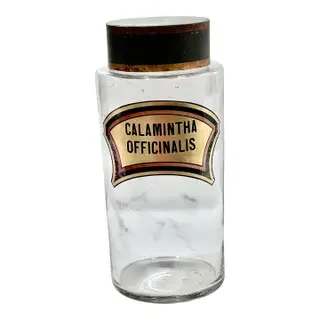
Apothecary bottles like this one were commonly used in pharmacies and apothecaries from the 18th through the early 20th centuries to store and dispense various medicinal ingredients, herbs, and chemicals. The labels were crucial for identifying the contents, often written in Latin to ensure accuracy and consistency across different regions and languages. These bottles were typically made of glass, which was considered inert and suitable for storing sensitive substances.
Calamintha officinalis, as indicated on the label, refers to a species of calamint, a herb in the mint family known for its medicinal properties. Apothecary bottles are now highly sought after by collectors for their historical significance and aesthetic appeal. They represent a tangible link to the history of medicine and pharmacy, reflecting the practices and knowledge of past eras.
Apothecary bottles like this one were commonly used in pharmacies and apothecaries from the 18th through the early 20th centuries to store and dispense various medicinal ingredients, herbs, and chemicals. The labels were crucial for identifying the contents, often written in Latin to ensure accuracy and consistency across different regions and languages. These bottles were typically made of glass, which was considered inert and suitable for storing sensitive substances.
Calamintha officinalis, as indicated on the label, refers to a species of calamint, a herb in the mint family known for its medicinal properties. Apothecary bottles are now highly sought after by collectors for their historical significance and aesthetic appeal. They represent a tangible link to the history of medicine and pharmacy, reflecting the practices and knowledge of past eras.