
 Image 1 of 1
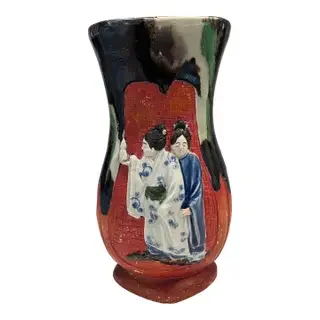
Sumida Gawa pottery is a distinct style of Japanese art pottery that emerged in the late 19th century, primarily for export to the West. Named after the Sumida River in Tokyo, this pottery is known for its robust, heavy clay bodies decorated with applied, three-dimensional figures and flowing, often dripping glazes. Production began around 1890 and continued until after World War II, with some sources suggesting production continued even later.
The pottery features a heavy, robust clay body covered in raised, three-dimensional figures, often depicting animals, people, and scenes from Japanese life or mythology.
Flowing Glazes:
The glazes used are often dramatic and flowing, sometimes creating a "flambe" or dripping effect.
Early Production:
The pottery was initially produced in the Asakusa district near Tokyo, near the Sumida River.
Potters:
The pottery was developed by the Inoue Ryosai family, with Ryosai I (and later his son and grandson) playing key roles in its creation.
Production Location Shift:
In 1924, the pottery's production moved from the Asakusa district to Yokohama.
Sumida Gawa pottery is a distinct style of Japanese art pottery that emerged in the late 19th century, primarily for export to the West. Named after the Sumida River in Tokyo, this pottery is known for its robust, heavy clay bodies decorated with applied, three-dimensional figures and flowing, often dripping glazes. Production began around 1890 and continued until after World War II, with some sources suggesting production continued even later.
The pottery features a heavy, robust clay body covered in raised, three-dimensional figures, often depicting animals, people, and scenes from Japanese life or mythology.
Flowing Glazes:
The glazes used are often dramatic and flowing, sometimes creating a "flambe" or dripping effect.
Early Production:
The pottery was initially produced in the Asakusa district near Tokyo, near the Sumida River.
Potters:
The pottery was developed by the Inoue Ryosai family, with Ryosai I (and later his son and grandson) playing key roles in its creation.
Production Location Shift:
In 1924, the pottery's production moved from the Asakusa district to Yokohama.